
Op-Ed | From Intra-Northern Reconciliation to National Reconciliation
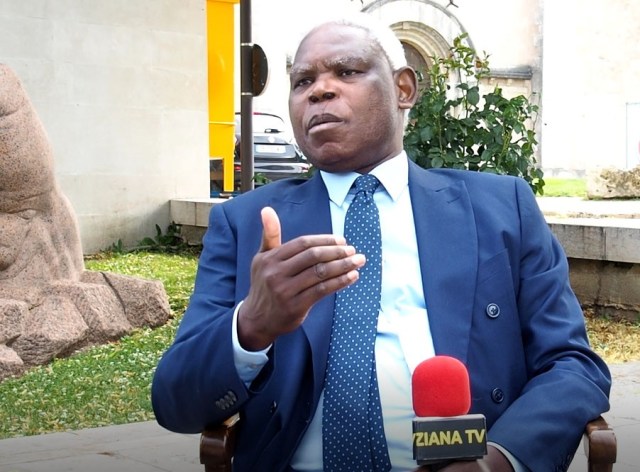
By Modeste Boukadia, President of the Democratic and Republican Circle Party of Congo – May 31, 2025
Toward a Reconciled Congo: The Time for National Unity Has Come
As Denis Sassou Nguesso’s recent official visit to Paris reveals growing diplomatic isolation, Modeste Boukadia calls for a national awakening. He urges the country’s key stakeholders – including those closest to power – to support a peaceful political transition that transcends regional divides and paves the way for true national unity. In this op-ed, he offers a clear-eyed assessment of the current situation and outlines a vision for a reconciled Congo, ready to face the challenges of a new geopolitical era. (CDRC Press Office.)
The resilience of the Republic of Congo depends on a collective awakening – one that must include the senior officers and generals of the Congolese Armed Forces (FAC). Though often seen as mere auxiliaries of militias serving to prolong a power perceived as “destined to remain in the North,” these forces now bear a historic responsibility: to serve not a region, but the nation.
In this regard, the recent official visit of President Denis Sassou Nguesso to Paris, upon invitation from his French counterpart Emmanuel Macron, deserves careful political scrutiny. It reveals subtle but unmistakable signs of a possible opening towards a Peaceful Political Transition — a path of compromise I have long advocated to preserve lives and restore national cohesion.
On May 22, 2025, President Sassou Nguesso arrived in France. Yet contrary to the formalities associated with a state visit, he was welcomed not by the French president or even a cabinet minister, but by a regional prefect. No state dinner was held. That very evening, President Macron dined with the Ethiopian Prime Minister instead. Such deviations from protocol are telling.
More striking still: images showed two Congolese officials – not the heads of state – signing bilateral agreements, while Presidents Macron and Sassou Nguesso stood by. This runs counter to traditional diplomatic customs. No joint press conference was held. No final communiqué issued. Save for brief mentions on RFI, France 24, and a short segment on a French news channel, the visit received little to no media coverage. It is difficult not to see this trip as a diplomatic misstep, or even, symbolically, as a farewell tour. One might even interpret the presence of the French Ambassador to Congo, Madame Claire Bodonyi, at both his arrival in France and return to Brazzaville, as a sign of this turning point.
Faced with these realities, those loyal to President Sassou Nguesso must help him take the courageous political step the Congolese people have long awaited. It is understandable that many military officers and civil servants owe their careers to his leadership and therefore feel a sense of duty toward him. But their highest responsibility today is to ensure that he makes the most consequential decision of his political life. History alone will judge the quality of his leadership. For now, the people overwhelmingly desire change — and those who once rose under Sassou Nguesso must now help guide the country toward a new direction.
That direction cannot remain confined to intra-northern reconciliation. It must expand into a genuine national union, beyond North-South and South-North antagonisms. Let the Ngala no longer blame the Bakongo, and vice versa. Let us reclaim our shared Congolese identity to build the Republic — the very one envisioned by our Founding Fathers on November 28, 1958 — despite its early imperfections.
It is our collective duty to reshape those imperfections. A united and indivisible Republic requires reformed institutions that are accessible and fair to all Congolese citizens, regardless of origin or background.
In this light, Sassou Nguesso’s state visit, despite its limited diplomatic success, may paradoxically become an opportunity for national awakening. It can mark the beginning of a new course — one that encourages Congolese citizens abroad to return through a voluntary desimmigration process, and invites those at home to join them in forging a renewed national force.
It is our ability to unite that will allow Sassou Nguesso to exit through history’s main door — and will allow Congo to embark on a new political trajectory: bold, dynamic, and respectful of its international commitments. In today’s global context marked by economic and geopolitical rivalries, Congo has the opportunity to reclaim its strategic role in Central Africa. Just as it once did in the UDEAC era, it can again become a key transit country through peaceful diplomacy and regional cooperation, particularly by strengthening the Brazzaville-Kinshasa-Luanda axis.
This new path is not utopian. It is a historic imperative. It is up to us to make it a reality.
Modeste Boukadia, President of the Democratic and Republican Circle Party of Congo
 Cercle des Démocrates et Républicains du Congo